How to Choose the Best Color Changing Lights for Your Home?
Choosing the right Color-Changing Lights for your home can transform your living space. Renowned designer Sarah Bright once said, "The right lighting sets the mood." Color-Changing Lights have become increasingly popular for their versatility and ambiance.
These lights can adapt to your mood, enhance your décor, and provide functionality. Imagine relaxing in a warm, soft glow or energizing your space with vibrant hues. However, selecting the best ones can be confusing. With the vast array of options available, it’s easy to feel overwhelmed.
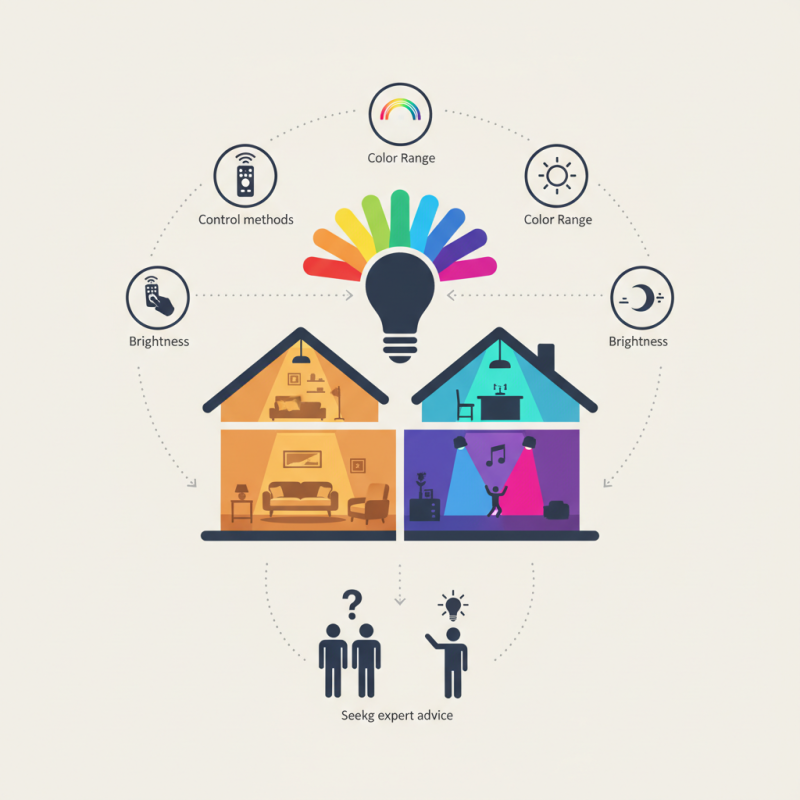
Not all color-changing lights are created equal. Factors like brightness, color range, and control methods vary significantly. You may find some lights lack the vibrancy you desire. If you’re unsure, seeking expert advice can make a difference. Remember, every choice in lighting can impact your home's atmosphere.
Understanding Color Changing Lights: A Comprehensive Overview
Color changing lights have become popular for home decor. These lights offer versatility and can enhance any room. According to a recent industry report, the global market for smart lighting, including color changing options, is projected to grow by 25% annually. This growth highlights the increasing interest in innovative home lighting solutions.
When selecting color changing lights, consider the types available. LED lights are energy-efficient and last longer than traditional bulbs. They provide a wide range of colors and can often be controlled remotely. Another factor to keep in mind is the placement of these lights. Think about where you want to set the mood. Different areas of a room require different kinds of lighting effects.
Tips: Test the ambiance by changing colors at different times of the day. Observe how certain hues make you feel. Bright colors can uplift your mood, while softer tones create a calming environment. However, overuse of bright colors can be overwhelming. It’s essential to balance vibrant shades with neutral tones.
Finally, remember that compatibility with smart home systems matters. Check how the lights work with existing technology. Not all systems support every light feature. Embracing color changing lights can transform your space, but careful selection is key.
How to Choose the Best Color Changing Lights for Your Home?
| Feature | Description | Benefits | Considerations |
| Light Source Type | LED, Incandescent, or CFL | Energy efficiency, heat output | Initial cost, longevity |
| Color Range | Full spectrum of colors | Customization of ambiance | Limited options available |
| Control Method | Remote control, app, or manual | Convenience and accessibility | Technology dependency |
| Brightness Levels | Adjustable lumens | Versatility for different situations | May require dimmer switch |
| Installation Type | Plug-in, hardwired, or battery-operated | Flexibility in placement | Installation difficulty |
| Price Range | Entry-level to premium | Options for different budgets | Value vs. features |
Identifying Your Lighting Needs: Choosing the Right Environment
When considering color changing lights, it helps to identify your lighting needs. Think about the atmosphere you want to create. Different rooms often require varying lighting styles. For instance, a cozy glow is ideal for a bedroom, while brighter, vibrant colors might be better for a playroom.
Evaluate the activities you plan to do in each space. Do you need bright light for reading or softer hues for relaxation? The lighting should enhance those experiences. It’s easy to overlook the importance of light in setting a mood, but it truly affects how a room feels. You may find that a specific shade of blue can calm you, while a warm yellow energizes your living area.
Sometimes, experimentation teaches valuable lessons. You might buy lights that look great in the store but don’t fit your space. Reflect on how different colors interact with your furniture and paint. The ideal lighting often requires trial and error. Don’t hesitate to shift things around. The goal is to create a harmonious environment that meets your needs.
Exploring Color Options: Selecting the Perfect Hue for Your Space
Choosing the right hue for your space can transform its ambiance significantly. Consider the mood you wish to create. Cool colors like blues and greens tend to calm the mind. They are ideal for bedrooms or study areas. Warm colors, such as yellows and reds, can energize a space. These hues work well in kitchens or dining areas.
Lighting can also affect how colors are perceived. Natural light highlights hues differently than artificial sources. A shot of purple may appear vivid in daylight but muted under warm bulbs. Experimenting with samples in your space is essential. Some colors may seem lovely in stores but clash in your home. Take time to test how each shade complements your décor.
Personal preferences play a crucial role. What evokes happiness for you? Favorite colors may not always suit your space. Reflection is key. Consider how your color choices influence your mood daily. Don't rush this process. Finding the perfect hue often requires patience and adjustment. Embrace the imperfections of color selection; they contribute to your unique style.
How to Choose the Best Color Changing Lights for Your Home?
This chart illustrates the popularity of different color options for color changing lights among homeowners. Each color option has been rated based on its preference level, which indicates how often it is chosen for home lighting solutions.
Evaluating Features: Comparing Smart Technology and Control Methods
When selecting color changing lights for your home, smart technology and control methods are critical to assess. Many lights offer app-based controls. This allows you to change colors from your smartphone. Some lights even support voice commands, making operation effortless. Consider how these features fit into your lifestyle.
Tips: Always check app compatibility. Not all lights work with every smartphone. Read user reviews. Some apps might not be user-friendly. Don't rush your decision.
Additionally, consider remote controls. They provide convenience, especially for hard-to-reach lamps. However, remember that a remote can easily get misplaced. Think about a central hub. It simplifies managing multiple lights. Yet, if it fails, a whole setup could be compromised. Balance convenience and potential pitfalls for the best choice.
Budgeting for Your Color Changing Lights: Costs and Value Considerations
When budgeting for color changing lights in your home, it's important to consider both upfront costs and long-term value. According to a recent market report, the average price for quality LED color changing lights ranges from $15 to $50 per fixture. However, investing in this technology often pays off. Operating costs are lower than traditional lighting, with LEDs using up to 80% less energy. This translates to significant savings over time.
Tip: Look for energy-efficient options. They often come with a higher initial price but save money in the long run. It’s also wise to evaluate the lifespan of the lights. High-quality LED products can last over 25,000 hours, reducing replacement frequency.
Think about the features that matter most. Some lights allow for smartphone control, while others may offer smart home integration. These features can drive up costs but enhance convenience and usability. You might find cheaper options with basic functions, yet they may lack durability or flexibility. Prioritize what aligns best with your lifestyle and needs. Always review your budget and match it with the functionality you desire.