How to Choose the Right Garbage Bags Size and Type
Choosing the right Garbage Bags size and type is a small decision with a noticeable daily impact. A bag that is too small may split beside the kitchen bin. One that is too large can waste material, money, and storage space. The right choice depends on more than capacity. Consider the bin’s dimensions, the waste’s weight, moisture, and sharp edges.
George Tchobanoglous, a respected waste-management expert, is often credited with saying, “The best way to manage waste is to not generate it in the first place.” His point adds useful perspective: a suitable bag supports cleaner handling, but it should not encourage unnecessary consumption. For food scraps, a leak-resistant bag with a secure drawstring may be practical. For dry office paper, a lighter bag could be enough. Heavy-duty Garbage Bags suit dense or rough waste, yet they are not automatically better for every task.
Measure the bin before buying. Check the bag’s width, length, thickness, and stated capacity. Do not trust the gallon label alone. Manufacturers may measure capacity differently. A bag should reach over the rim without excessive slack. Leave room for tying.
Small details matter.
This guide compares common sizes, materials, thickness levels, and closure styles. It also considers household routines, workplace use, and outdoor cleanup. Some recommendations may seem obvious, but real-world use is messier. A “perfect” bag can still fail when overloaded, stored in heat, or used for the wrong waste. Practical judgment remains essential.
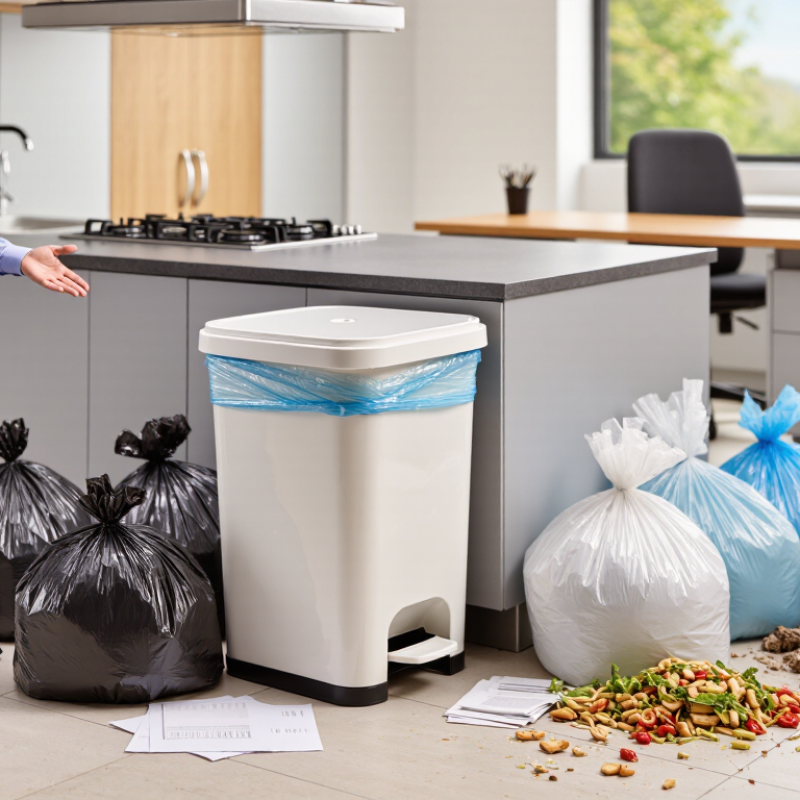
Measure Bin Capacity and Match It to 30–60 L Household Bags
How to Choose the Right Garbage Bags Size and Type
Measure Bin Capacity and Match It to 30–60 L Household Bags
A bag’s printed volume is only a starting point. Measure the bin’s inside height, width, and depth. For a rectangular bin, multiply these measurements and divide by 1,000. The result is approximate litres. Round bins need a different calculation: 3.14 × radius × radius × height, divided by 1,000.
A 40-litre bin usually suits a 45–60 litre bag. The extra space helps the liner fold over the rim without slipping. For a small kitchen bin, 30 litres may work better. A 60-litre bag fits larger household bins, but only when the bin is not packed tightly. U.S. EPA data reported 4.9 pounds of municipal waste per person daily in 2018. Eurostat recorded 513 kilograms per person across the EU in 2022. Waste volumes vary sharply between homes, especially with food packaging and wet waste.
Tips: Check the base width, not only the opening. A narrow bag can tear when pulled over a wide rim. Choose thicker material for sharp cans or damp scraps. Thin bags waste less plastic, but they can fail sooner. I once measured only the bin height and bought the wrong size. That small mistake caused constant slipping. Measure twice. Also, leave roughly 15 centimetres of overhang for secure fitting.
How to Choose the Right Garbage Bag Size and Type
Measure the bin’s capacity and choose a bag with slightly more volume to allow overhang, movement, and secure tying. The recommendations below cover common 30–60 L household bags.
Tip: Capacity is only one part of fit. Check the bag’s width and height against the bin’s dimensions, especially for tall, narrow, or wide containers.
Select 0.35–0.55, 0.7–1.0, or 1.0+ Mil Thickness by Duty Level
How to Choose the Right Garbage Bag Size and Type
Garbage bag thickness should match the weight, moisture, and edges of your waste. A mil equals one-thousandth of an inch. For light-duty use, choose 0.35–0.55 mil bags. They work well in bathroom bins, office wastebaskets, and dry paper waste. These bags often stretch easily, but overfilling can cause small tears near the rim.
Choose 0.7–1.0 mil for everyday kitchen and workplace waste. This range handles damp food scraps, used packaging, and heavier mixed waste more reliably. A 0.7 mil bag may suit a small kitchen bin, while 1.0 mil gives more support for larger loads. Check the bag’s dimensions, not only its thickness. A strong bag still fails when it cannot cover the container’s opening.
For demanding work, select bags rated at 1.0 mil or thicker. They are better for dense waste, rough materials, outdoor cleanup, and objects with blunt edges. I once chose a thin bag for wet waste and regretted it when the bottom stretched across the floor. Thickness helps, but it is not magic. Sharp corners can puncture even heavy plastic, so wrapping or separating them remains sensible. When unsure, test one filled bag before buying a full case. Waste habits change, and my first estimate is not always right.
Verify Compostable Bags Against ASTM D6400 or EN 13432 Standards
Choosing the right garbage bag starts with its job. A small kitchen caddy needs a different size than a wet commercial bin. Measure the container’s width, height, and rim overlap. Leave enough space for tying. A bag that barely fits may split when food scraps settle.
For compostable bags, ask for evidence against ASTM D6400 or EN 13432. These standards assess biodegradation, disintegration, material safety, and compost quality under controlled conditions. They are not casual marketing terms. Check whether the documentation identifies the exact bag material, thickness, and production model. A certificate for one product may not cover another. The label can look convincing, yet the evidence may be incomplete.
ASTM D6400 generally relates to products designed for commercial composting in North America. EN 13432 applies to compostable packaging requirements in Europe. Neither standard automatically means the bag will break down in a backyard pile. Local composting facilities may also reject certified bags because their processing conditions differ. Ask the facility before buying cartons of bags. That small call can prevent waste.
Do not judge compostability by color, softness, or a leaf symbol. Test the fit with a realistic load, such as vegetable peelings and damp paper. Watch for leaking seams. A thinner bag may reduce material use, but it can fail under heavy moisture. I would also recheck certification records periodically; standards, suppliers, and facility rules can change.
