What Is a Light Fixture and Which Type Is Best?
A light fixture is more than a decorative object on a ceiling or wall. It combines a housing, light source, wiring, and mounting hardware. Together, these parts shape how a room looks and functions. Light Fixtures can create a focused reading area, soften a dining space, or improve visibility across a kitchen counter.
The right type depends on the room’s purpose, ceiling height, layout, and existing electrical system. Flush mounts suit low ceilings, while pendants can highlight an island or table. Recessed lights offer a clean appearance, but they require careful spacing and suitable ceiling access. Wall sconces add warmth without consuming floor space. Track lighting provides flexibility, although it may feel visually busy in smaller rooms.
Light quality matters as much as fixture style. Check lumens for brightness, color temperature for mood, and the beam angle for coverage. A warm 2700K setting often feels comfortable in bedrooms. A cooler setting may support detailed kitchen tasks. Always confirm dimmer compatibility and the fixture’s damp or wet-location rating. A qualified electrician should inspect uncertain wiring and complete electrical connections safely.
The best choice is rarely obvious. It may look perfect in a showroom but cast harsh shadows at home. Even experienced designers can overlook glare, maintenance access, or bulb replacement. Measure the space, observe natural daylight, and test finishes beside your walls. Small details matter. This guide explains common fixture types and helps you compare their strengths, limitations, and practical uses.
What Is a Light Fixture?
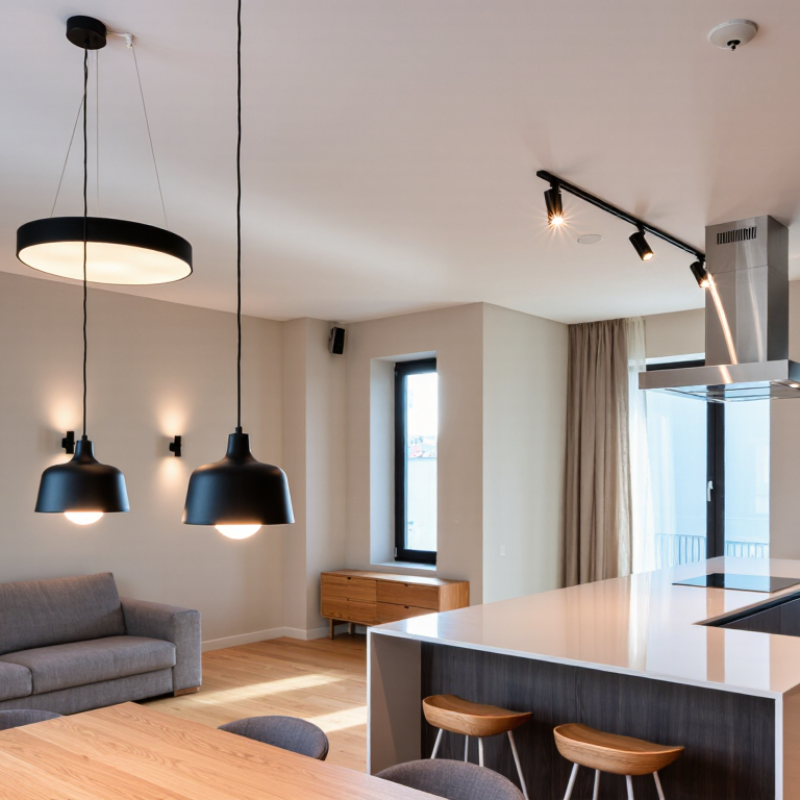
A light fixture is the complete unit that produces and distributes light. It is not just the bulb. The fixture may include a housing, socket, wiring, reflector, diffuser, and control system. Some modern units contain built-in light-emitting diodes, so no replaceable bulb is visible. The fixture connects light safely to a ceiling, wall, floor, or track. It also shapes the beam. A frosted diffuser softens light over a dining table, while a reflector sends sharper light toward a work surface. In practice, construction quality matters as much as appearance. Loose wiring, poor heat control, or weak mounting can reduce performance and create safety concerns.
The best type depends on the room, task, and installation conditions. A recessed fixture can create a clean ceiling line, but it may produce glare without proper trim. A pendant can light a table effectively, yet its height needs careful adjustment. For damp locations, select a fixture with an appropriate ingress-protection rating. Check lumens, color temperature, color-rendering index, and dimming compatibility.
The U.S. Department of Energy reports that LED lighting uses at least 75% less energy and lasts up to 25 times longer than incandescent lighting. That advantage is significant, but efficiency alone does not guarantee comfort.
I once treated brightness as the main measure of quality. That was too simple. A room can be bright and still feel cold, uneven, or tiring. DOE guidance also notes that heat management affects LED performance, which makes ventilation and fixture design worth examining before installation.
How Light Fixtures Work and Their Main Components
A light fixture is the complete assembly that holds, powers, and directs a light source. It connects to a building’s electrical circuit through wires, terminals, and a switch. When the switch closes the circuit, electricity reaches the socket or LED driver, producing light. Simple physics, but small faults can cause flickering or heat.
Its main components include the housing, mounting bracket, socket, diffuser, reflector, and electrical connections. The housing protects internal parts and supports the fixture. A socket grips a replaceable lamp, while an LED driver regulates power for integrated LEDs. The diffuser softens harsh brightness, and the reflector sends light toward a work surface. Some fixtures also include dimmers, sensors, or adjustable joints. In practice, selecting brightness without checking beam angle is an easy mistake. A bright fixture may still leave a desk poorly lit.
Tips: Turn off power before inspection. Check the fixture’s voltage and load ratings. Choose warm light for relaxing rooms and clearer light for detailed tasks. Secure the mounting hardware firmly. If wiring appears damaged, consult a qualified electrician rather than guessing. I have found that installation instructions can seem obvious, yet one overlooked connector may create trouble later. Good lighting depends on both electrical safety and thoughtful placement.
Common Types of Light Fixtures and Their Uses
What Is a Light Fixture and Which Type Is Best?
A light fixture holds, protects, and directs a light source. Its type should match the room’s task, ceiling height, and moisture level. Recessed fixtures sit inside the ceiling and create a clean, even layer of light. They work well in kitchens, hallways, and offices, but poor spacing can produce dark patches or harsh glare.
Pendant fixtures hang lower and focus light over dining tables, islands, or reception desks. Flush-mount fixtures suit low ceilings because they preserve headroom. Track lighting offers flexible aiming for artwork, retail displays, or changing room layouts. Wall sconces soften corridors and bedrooms, while linear fixtures support accurate work lighting over benches and desks. Outdoor fixtures require suitable wet-location ratings. This detail is often overlooked.
The International Energy Agency reports that lighting uses about 15% of global electricity. The U.S. Department of Energy states that LED products can use at least 75% less energy and last up to 25 times longer than incandescent lamps. These figures support LED fixtures for many applications, though efficiency alone does not guarantee comfort. Check color temperature, color rendering, glare control, and dimming compatibility. A warm 2700K fixture can make a bedroom feel calmer, while 4000K may improve visual clarity in a workshop. I still question overly bright designs. More light is not always better. A carefully layered plan usually performs better than one powerful ceiling fixture.
What Is a Light Fixture and Which Type Is Best? — Common Types of Light Fixtures and Their Uses
| Light Fixture Type | How It Provides Light | Typical Light Direction | Common Uses | Main Advantages | Key Considerations | Best For |
|---|---|---|---|---|---|---|
| Recessed Lighting | A housing and trim are installed inside a ceiling, leaving the visible portion nearly flush with the surface. | Downward and focused | General lighting, kitchens, hallways, offices, and low-profile ceiling applications | Clean appearance, space-saving design, and flexible beam options | Requires suitable ceiling space and careful placement to avoid glare or uneven lighting. | Minimalist interiors and layered ceiling lighting |
| Pendant Lighting | A fixture hangs from the ceiling by a cord, stem, or chain. | Downward, diffuse, or decorative | Kitchen islands, dining tables, entryways, bedrooms, and reading areas | Provides task or accent lighting while adding a visible design element | Height must be adjusted for clearance; the fixture can obstruct views if mounted too low. | Focused lighting over tables, counters, and selected areas |
| Chandelier | A multi-arm or multi-light ceiling fixture that distributes light from a central structure. | Upward, downward, or multidirectional | Dining rooms, foyers, stairwells, living rooms, and other feature spaces | Creates a strong focal point and can provide broad ambient illumination | Needs adequate ceiling support, sufficient room height, and regular dusting or cleaning. | Decorative statement lighting in spacious rooms |
| Flush-Mount Fixture | Mounted directly against the ceiling with little or no visible gap. | Broad, mostly downward and diffuse | Bedrooms, hallways, utility rooms, closets, and rooms with low ceilings | Compact profile, practical installation, and generally even room illumination | Usually offers less visual drama and may provide limited directional control. | Low ceilings and general-purpose ambient lighting |
| Semi-Flush-Mount Fixture | Attached close to the ceiling with a short stem or small gap between the fixture and ceiling. | Downward and partially upward | Bedrooms, hallways, dining areas, living rooms, and moderately low ceilings | Combines a relatively compact profile with more decorative presence than a flush mount | Requires more vertical clearance than a flush mount but less than most pendants. | Rooms needing both compact installation and decorative appeal |
| Track Lighting | Multiple adjustable heads are mounted on a track connected to a ceiling electrical point. | Adjustable and directional | Art displays, kitchens, retail areas, studios, and rooms with changing lighting needs | Allows several light sources to be aimed at different objects or areas | Visible hardware may not suit every style, and poorly aimed heads can create glare. | Flexible accent and task lighting |
| Wall Sconce | Mounted on a wall and fitted with a shade, diffuser, or exposed light source. | Upward, downward, outward, or bidirectional | Bathrooms, corridors, bedrooms, stairways, living rooms, and exterior walls | Saves floor and ceiling space while adding ambient, task, or accent light | Electrical boxes and wiring must be positioned correctly; shade design affects glare. | Wall-level illumination and decorative accent lighting |
| Under-Cabinet Lighting | Compact fixtures are installed beneath cabinets or shelves to illuminate the surface below. | Downward and close-range | Kitchen counters, workbenches, desks, display shelving, and vanities | Reduces shadows on work surfaces and improves task visibility | Placement and shielding are important to reduce reflected glare and visible hotspots. | Countertop and work-surface task lighting |
| Cove Lighting | Hidden fixtures direct light toward a ceiling or wall through an architectural recess or ledge. | Indirect and upward | Living rooms, bedrooms, theaters, hospitality spaces, and architectural details | Produces soft, low-glare illumination and emphasizes ceiling or wall forms | Needs a suitable architectural cavity and careful installation for continuous, even light. | Atmospheric ambient lighting and architectural emphasis |
| Picture Light | A narrow fixture mounted above or beside artwork, directing light onto its surface. | Focused and directional | Paintings, photographs, framed artwork, and display walls | Highlights selected objects without illuminating an entire room | Beam angle, mounting position, and heat or ultraviolet output should be considered for sensitive art. | Artwork and display-focused accent lighting |
| Ceiling Fan Light Kit | Light sources are integrated into or attached to a ceiling fan. | Usually downward and diffuse | Bedrooms, living rooms, covered porches, and other areas requiring air movement | Combines air circulation and overhead lighting in one ceiling location | Light output, fan operation, controls, and fixture balance must be compatible with the fan. | Rooms where ceiling space is limited and air circulation is also needed |
| Outdoor Wall Lantern | A wall-mounted, weather-rated fixture protects the light source while illuminating outdoor areas. | Downward, upward, or multidirectional | Entrances, patios, garages, balconies, and exterior pathways near walls | Improves visibility and can support entryway safety and exterior appearance | Choose a fixture with an appropriate outdoor rating and install it according to local electrical requirements. | Exterior entry and wall-adjacent lighting |
| Post or Path Light | A freestanding fixture mounted on a short post directs light across outdoor ground areas. | Downward and spread across the path | Walkways, driveways, garden paths, and landscape borders | Helps define routes and improves nighttime orientation in outdoor spaces | Spacing, glare control, weather resistance, and safe cable placement are important. | Low-level landscape and pathway illumination |
Selection tip: The best light fixture depends on the room’s purpose, ceiling height, required light direction, desired appearance, installation conditions, and the fixture’s safety rating for its location.
Key Factors for Choosing the Best Light Fixture
What Is a Light Fixture and Which Type Is Best?
Key Factors for Choosing the Best Light Fixture
A light fixture holds, powers, and directs a lamp or integrated light source. The best choice depends on the room, task, ceiling height, and maintenance plan. I once selected a beautiful pendant that produced harsh shadows over a dining table. It looked right in the showroom. It performed poorly at home.
Start with lumens, not watts. Lumens measure brightness, while watts measure energy use. The U.S. Department of Energy reports that LED lighting can use at least 75% less energy and last up to 25 times longer than incandescent lighting. The International Energy Agency also estimates that lighting represents roughly 15% of global electricity consumption. Check color temperature, too. Warm white suits bedrooms, while cooler light can support detailed work. A high color-rendering index helps fabrics, food, and skin appear more natural. These details are easy to overlook.
Tips: Match the fixture to the task. Confirm dimmer compatibility. Measure the ceiling box first. For bathrooms or outdoor areas, check the IP rating. Choose replaceable components when possible. Integrated fixtures may look cleaner, but replacement can become inconvenient. My own judgment is still imperfect: energy savings do not excuse glare, poor repair access, or an uncomfortable room. Test the light at night, not only under bright showroom lighting.
How to Install and Maintain a Light Fixture
A light fixture is the complete unit that holds a lamp, connects to household wiring, and directs illumination. Installation starts with safety, not decoration. Turn off the circuit breaker, then test the wires with a reliable voltage tester. Do not trust the wall switch alone.
Remove the old fixture carefully and photograph the existing wire positions. Mount the bracket to a rated electrical box, not only to drywall. Connect matching conductors with approved wire connectors, and secure the grounding wire firmly. Tuck wires gently into the box without crushing them. The fixture should sit level and feel stable before you install its shade or bulbs.
Maintenance is simple but should be consistent. Switch off power before cleaning, and use a dry or slightly damp microfiber cloth. Keep vents clear, especially on enclosed LED fixtures, because trapped heat can shorten their life. Check for flickering, buzzing, scorch marks, loose screws, or a warm wall plate. These signs may indicate a poor connection or an overloaded circuit. Stop using the fixture and ask a qualified electrician to inspect it.
Moisture matters. Use only fixtures rated for bathrooms, covered outdoor areas, or other damp locations. I once underestimated how quickly dust collected inside a glass shade; regular cleaning would have prevented uneven light. Still, cleaning alone cannot fix damaged wiring. When instructions seem unclear, pause and verify them rather than guessing.
What Is a Light Fixture and Which Type Is Best?
A light fixture is the housing that supports a light source, distributes illumination, and connects it safely to a building’s electrical system. The chart compares typical rated service life for common light sources used in residential and commercial fixtures.
LED fixtures generally require the least frequent replacement because their light sources commonly last about 25,000 hours. Fluorescent, compact fluorescent, halogen, and incandescent options typically have shorter rated lives. Always switch off the circuit before installation, follow the fixture’s wiring instructions, keep vents and diffusers clean, and replace damaged components promptly.
Related Posts
-
Innovative Trends in Exterior Led Strip Light at the 138th Canton Fair 2025
-
Unmatched Trust Globally Forged from Top Chinese Factory's Best Cool White Led Strip Lights
-
Welcome Global Buyers to Discover Innovative Outdoor Lights at the 137th Canton Fair in Guangzhou
-
2025 Tech Trends in LED Lighting: How to Choose the Best Waterproof LED Strips for Your Needs
-
Exploring the Growth of Indoor Strip Lights Market: Insights from the 138th Canton Fair 2025
-
Top 10 Light Fixtures to Enhance Your Home Style?